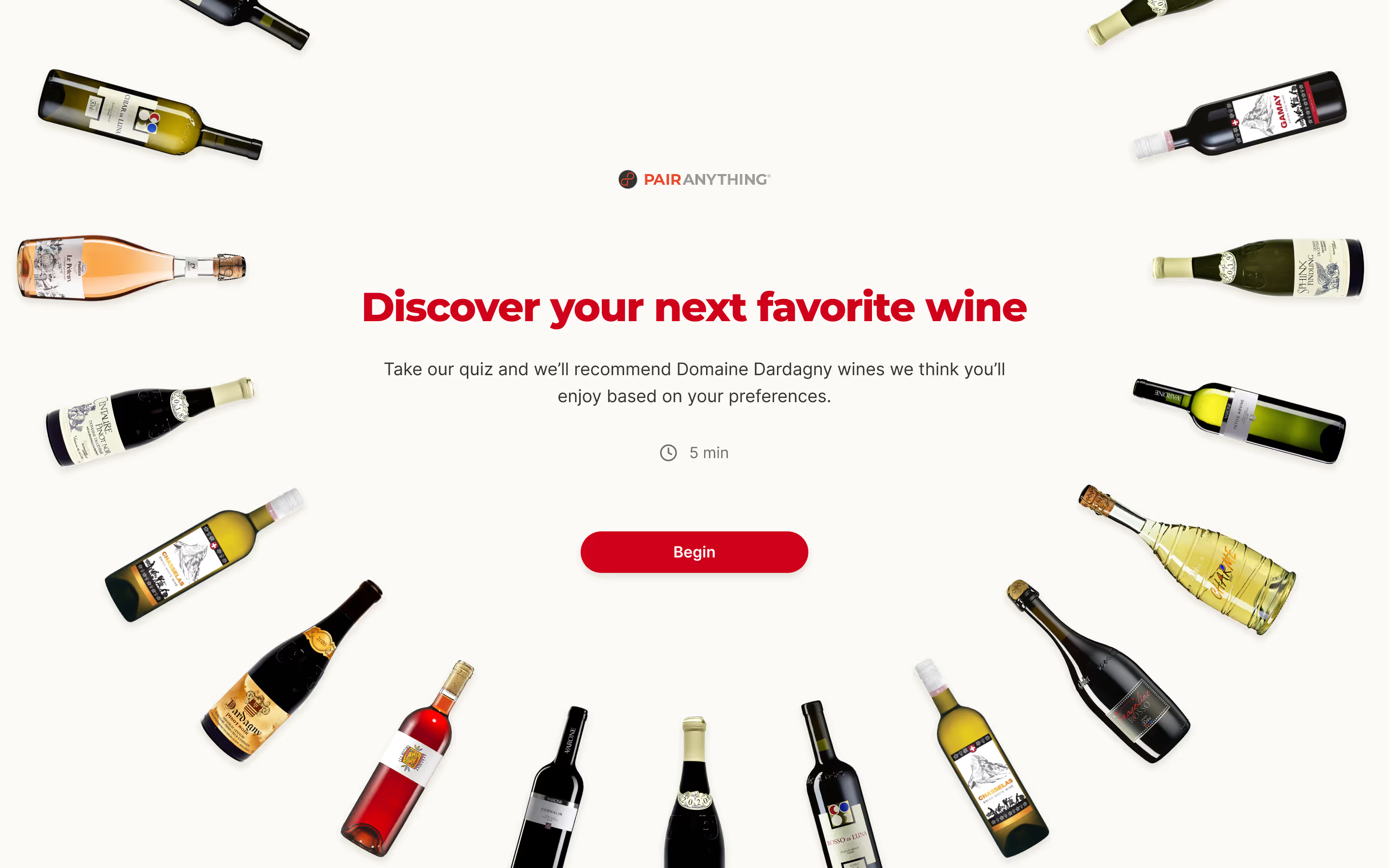
Wine Quiz
AI-powered, personalized discovery quiz that drove 7x engagement and 175% customer growth.
How do you help someone confidently choose something unfamiliar, in a category they don't know how to navigate? I designed the PairAnything Wine Quiz to invite shoppers to imagine how they'll enjoy the wine — a weeknight dinner, a friend's birthday — and recommend wines that match the vibe. It drove 7x more engagement and 175% customer growth, and validated the product enough to expand into a new retail vertical.
Guided discovery for an unfamiliar category is the same design challenge whether you're helping someone choose wine, insurance, or a software tool.
Role
Product Lead & Designer
Duration
2 months
Team
CEO, Engineer, Researchers, Product Manager
Context
Reframing our product
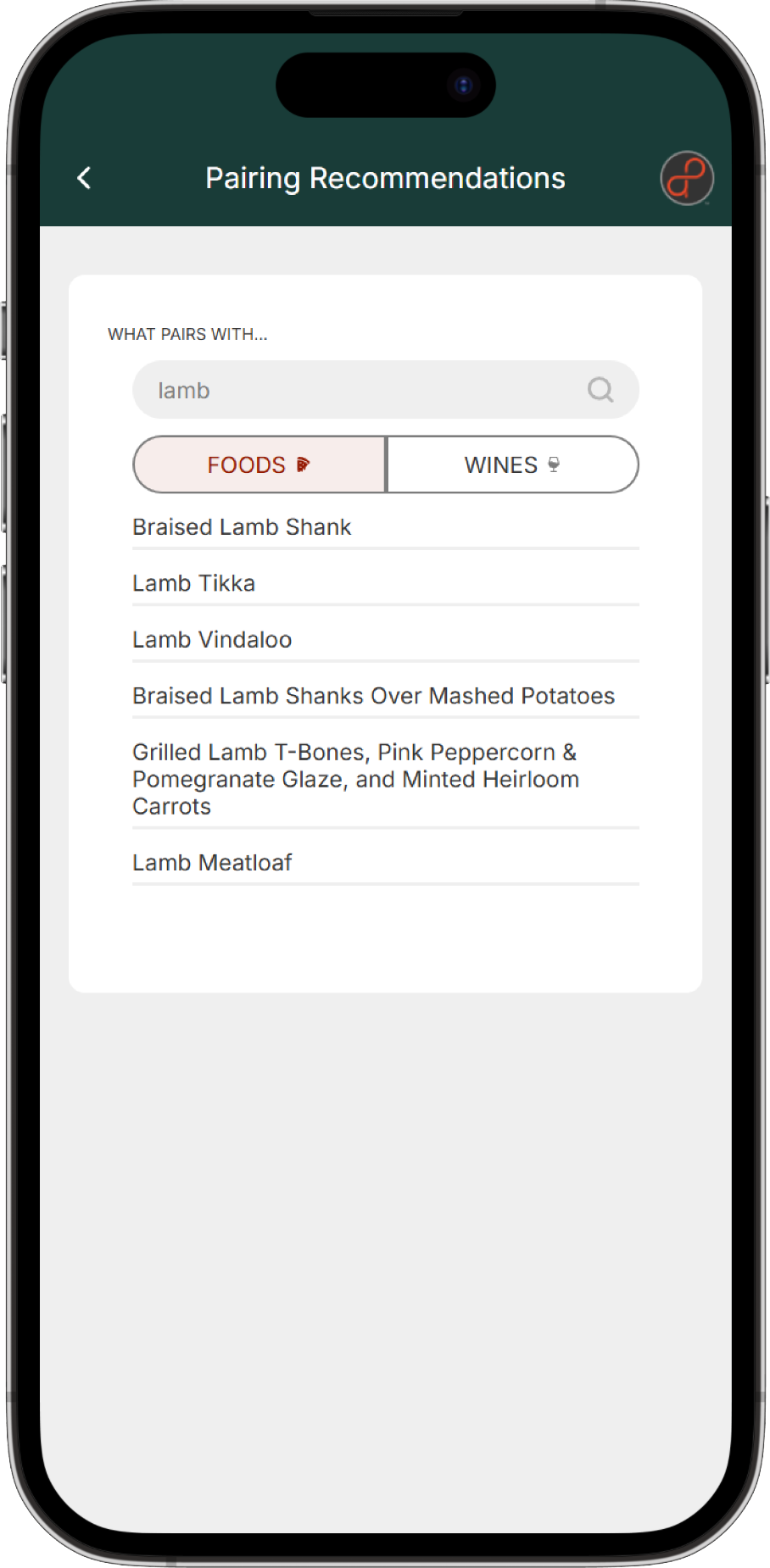
In the original PairAnything app, users could search for any food or wine to get a pairing, but only 5% of visitors did so. Then our customer removed the product from their site entirely, citing incorrect pairing information, and was on the verge of cancelling their contract.
Our CEO's instinct was to update the pairing content and keep the product the same. I wanted to validate whether that was really the problem, so I took initiative and met with our customer using the Jobs to Be Done framework to understand what pain we were actually hired to solve.
I learned that our customer didn’t care about the food and wine pairing content at all; instead, they had hired us to “help shoppers make buying decisions.” I brought that insight back to the CEO and advocated for a full product redesign — reframing PairAnything from a pairing search engine into a personalized wine recommender.
“
Help shoppers make buying decisions.
- Our customer, during the JTBD interview
Before
The old PairAnything app required shoppers to type and search to get a wine pairing recommendation.
After
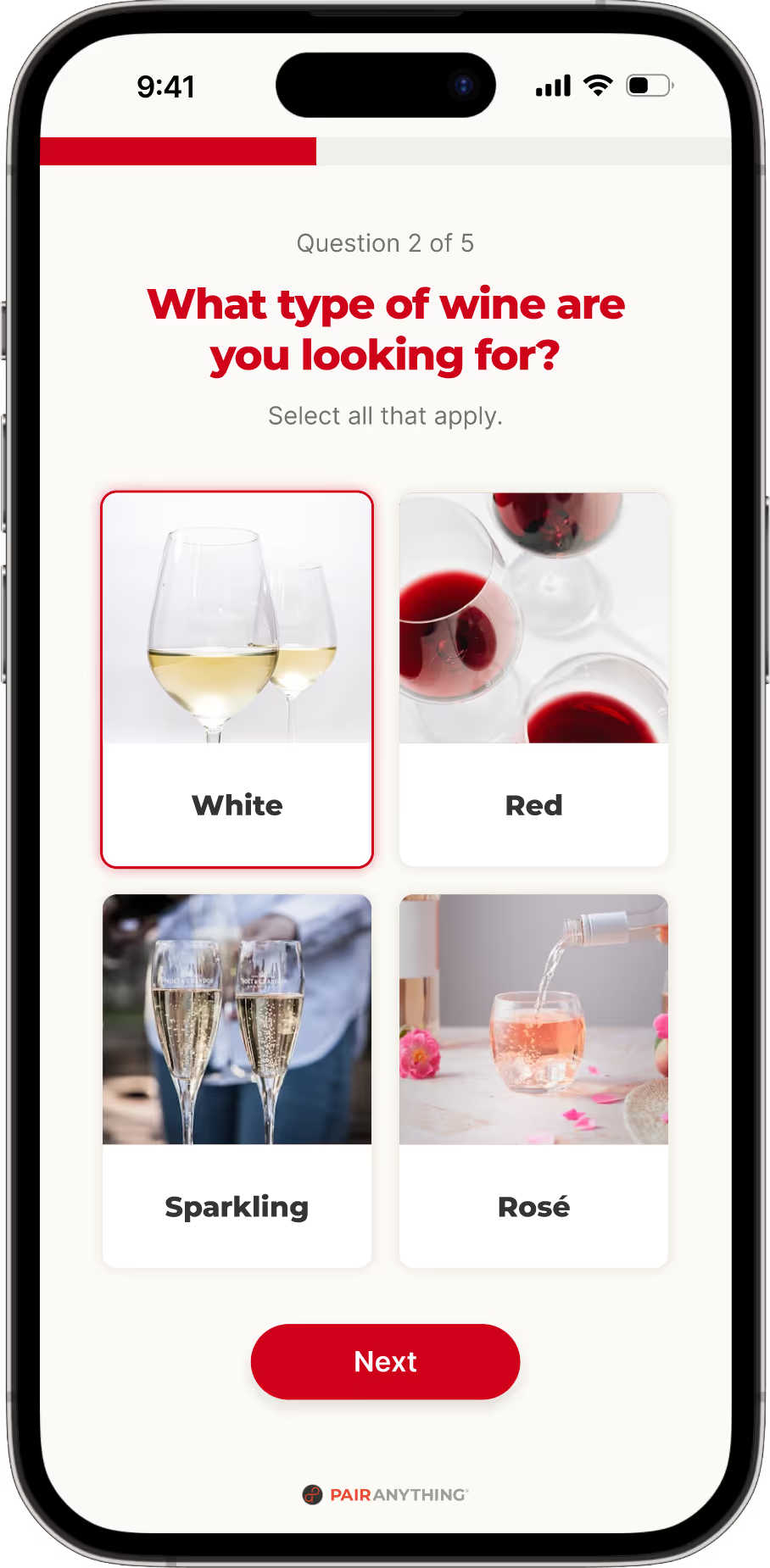
With the new Wine Quiz, shoppers answer a few short questions and receive 3 wine reccs and pairings.
Problem
Nobody buys new wine online.
I led a UX research team to learn how people currently shop for wine. Surveying 100+ individuals revealed that only 6% of wine sales occur online, and shoppers stick to buying wine they've tasted before. It was clear that people don't feel confident buying new wine online.
6%
of wine sales happen online, whereas 90% occurs in-person.
98%
of survey respondents only buy wines they’ve tasted before when shopping online.
Research findings
People trust people.
To understand why people don't buy new wine online, I interviewed shoppers and analyzed Reddit threads discussing buying wine in-person vs. online and the sentiment towards human and digital sommeliers. I kept hearing the same thing: people trust people. Winery owners echoed this pattern: their best sales occur during in-person interactions, and they struggle to sell when they aren’t physically present, making e-commerce particularly challenging.
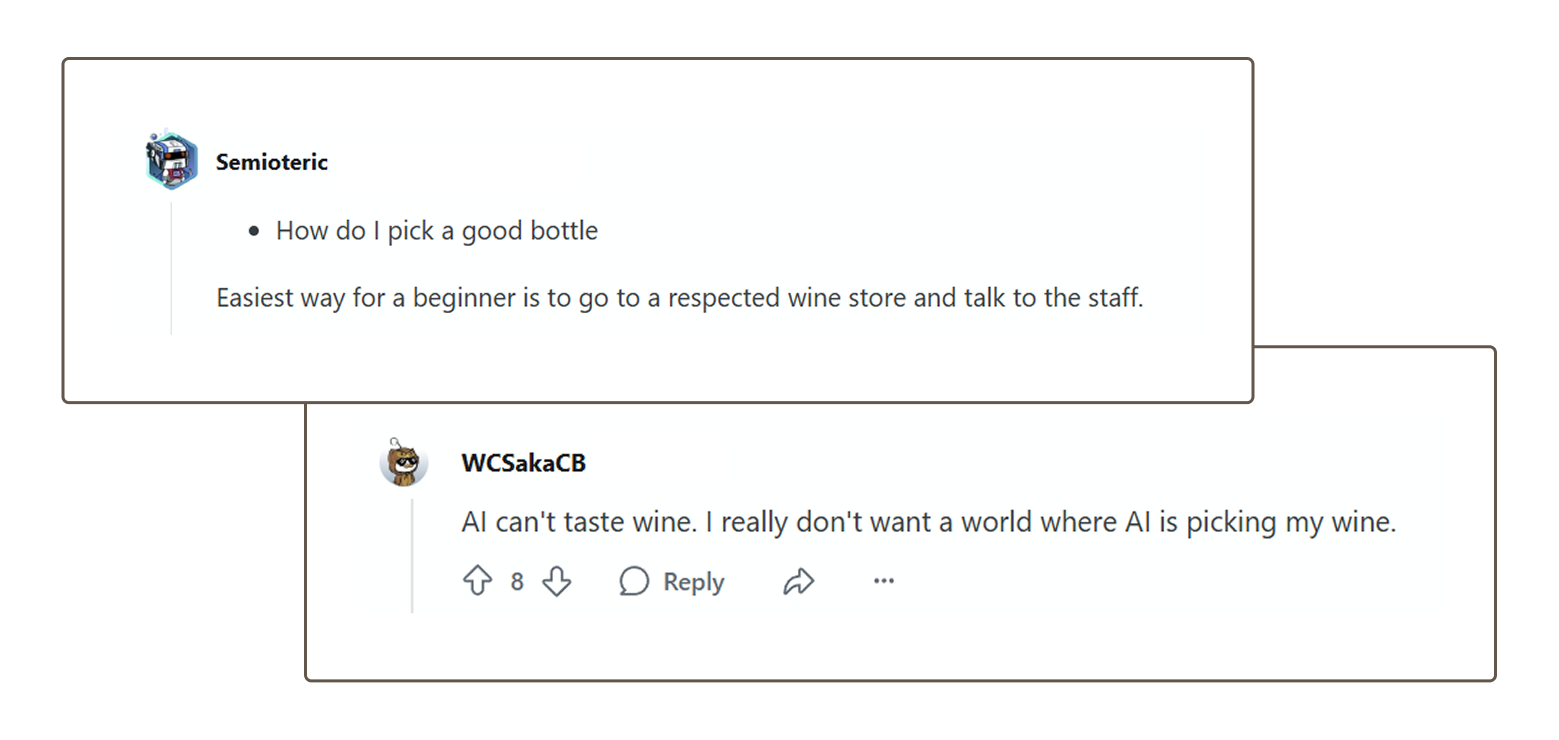
Top: Redditor replying to: “I am a Newbie to wine. What are the most important things for me to know?”
Bottom: Redditor replying to: “Are Soms, critics and store recommendations in danger from generative AI?”
I wanted to know
How can we help people feel confident buying wine they’ve never tasted before, online?
Secondly, how can we recreate the trust of talking to a winemaker, but online?
I hypothesized that...
If we help shoppers imagine how a wine fits into their life, they’ll be more likely to purchase and enjoy it. A quiz lowers the barrier to entry by asking users simple questions, similar to how a winemaker converses with shoppers in-person.
More research
How are wines being recommended today?
I interviewed sommeliers and winemakers to understand how conversations with shoppers typically unfold. They focus first on context, such as the meal or desired mood, rather than the wine flavors itself.
“
Well… what are you having? What’s the vibe?
- The first thing a sommelier asks
What are our competitors doing?
We tested a competitor product, Tastry, which asks technical questions like, “Do you like bell pepper?” While this reflects how experts evaluate wine characteristics, user interviews showed that these questions didn’t resonate with casual wine drinkers.
“
These quizzes don’t account for the fact that sometimes I want chocolate and sometimes I want vanilla (flavors)… they should also account for mood and pairings.
- User, after taking the Tastry wine quiz
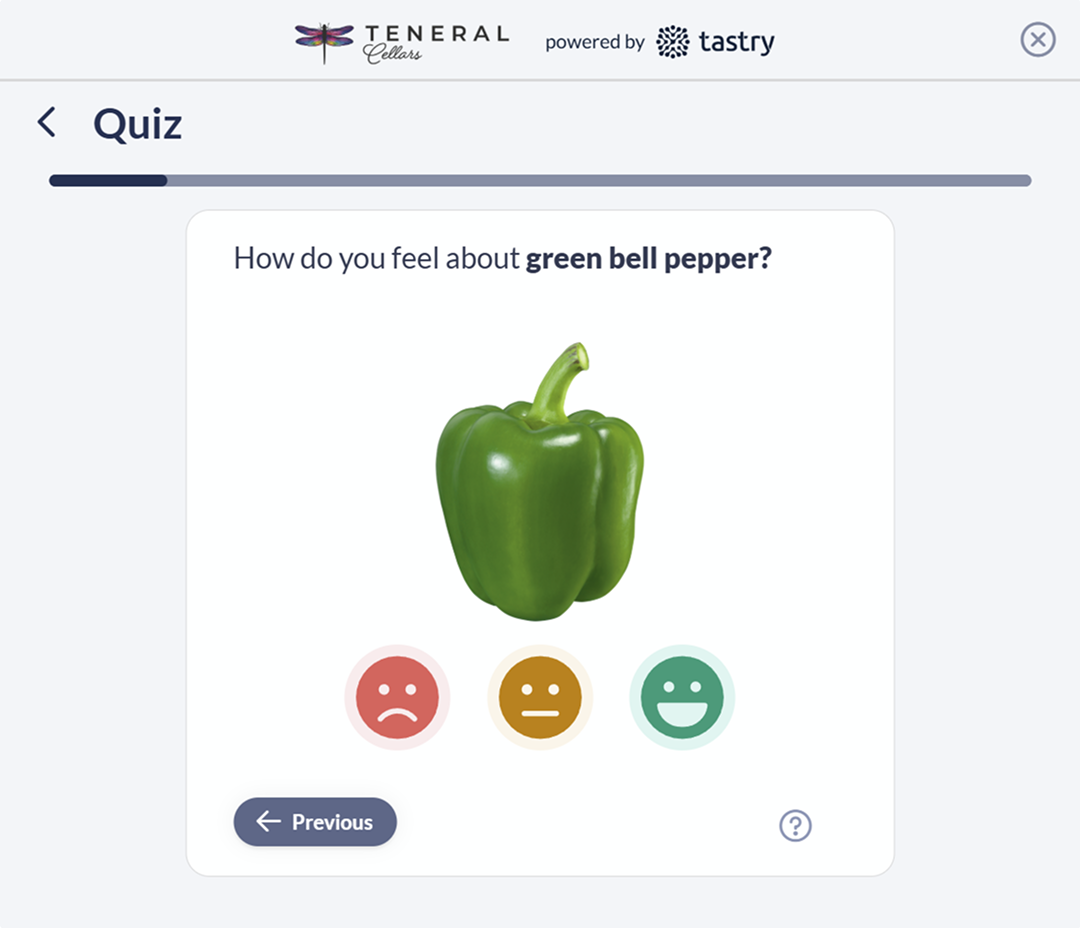
This user feedback reinforced my decision to focus on how shoppers want to enjoy wine and to design the quiz for repeat use. For example, someone might take it once for a birthday party and again for a casual weeknight meal.

In the PairAnything wine quiz, we ask how shoppers want to enjoy their wine and focus on the surrounding context, similar to how a conversation with a winemaker would go.
How do we ship our first AI product?
Can we use AI to make a recommendation?
Our CEO wanted to launch an AI-powered product. Our PM built a ChatGPT prototype to test whether it could recommend wines from a specific inventory based on user input.
It couldn't — ChatGPT hallucinated frequently, recommending non-existent wines instead of staying within the set inventory. I flagged that this level of accuracy wasn't fit to sell, especially to a customer already on the verge of cancelling over incorrect information.
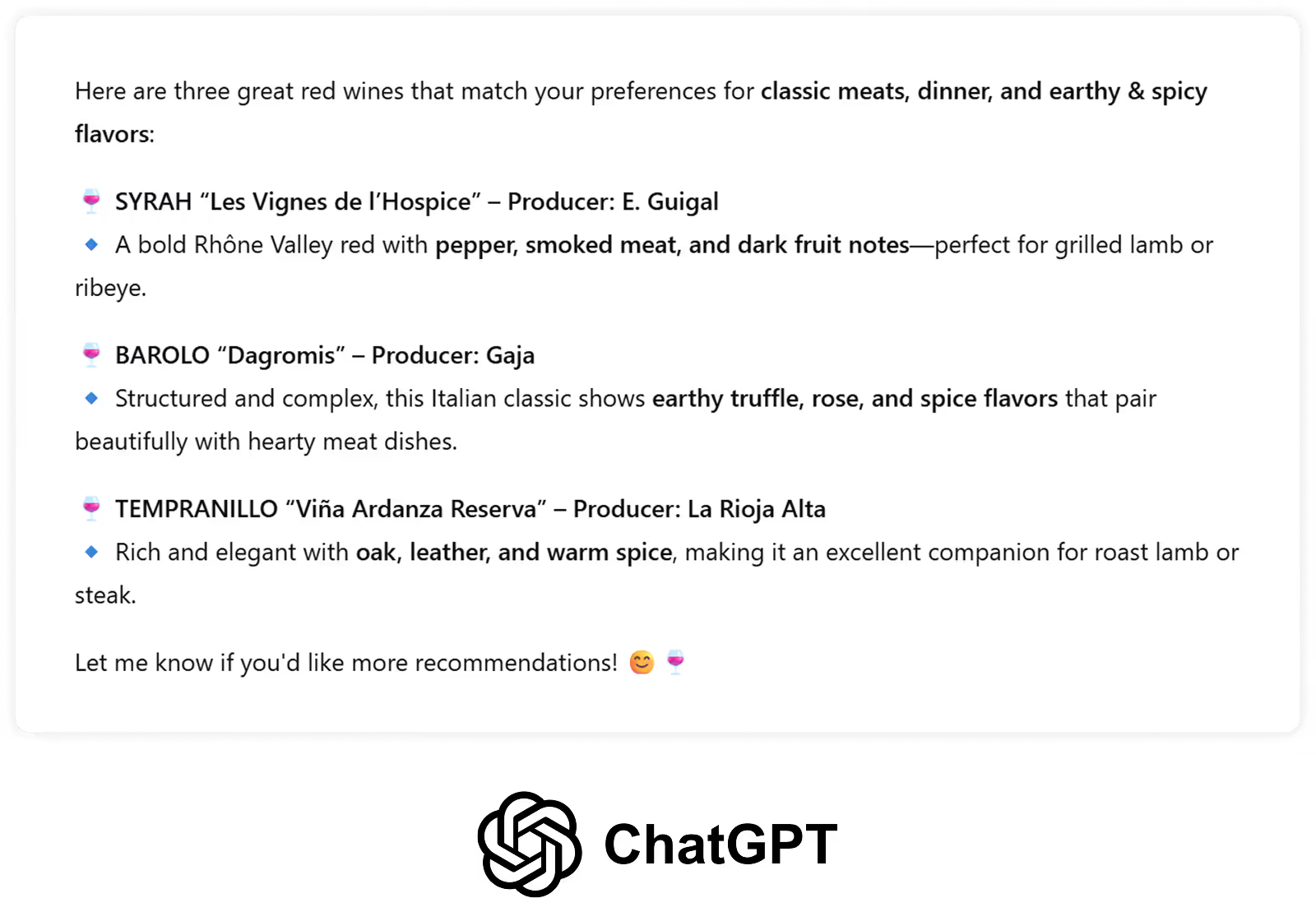
ChatGPT wasn't able to recommend wines from our customer's inventory; it would sometimes hallucinate and generate non-existent wines.
The test clarified that LLMs weren't the right tool for our use case, and set our long-term AI direction: building an in-house model trained on our proprietary wine and food data.
Reframing the challenge
What's the minimum we need to ship to make our customer happy?
Instead of asking "how do we use AI to make a recommendation?" I asked, "what's the minimum we need to ship to make our customer happy?"
From competitive research, I learned that ecommerce quizzes function like filters — each question narrows the options until you arrive at a recommendation. We didn't need AI to make the recommendation itself. Instead, we could use AI everywhere else in the process: ingesting wine and food data, building a tagging system to categorize products, and generating result copy. This reframe gave the team a path forward.
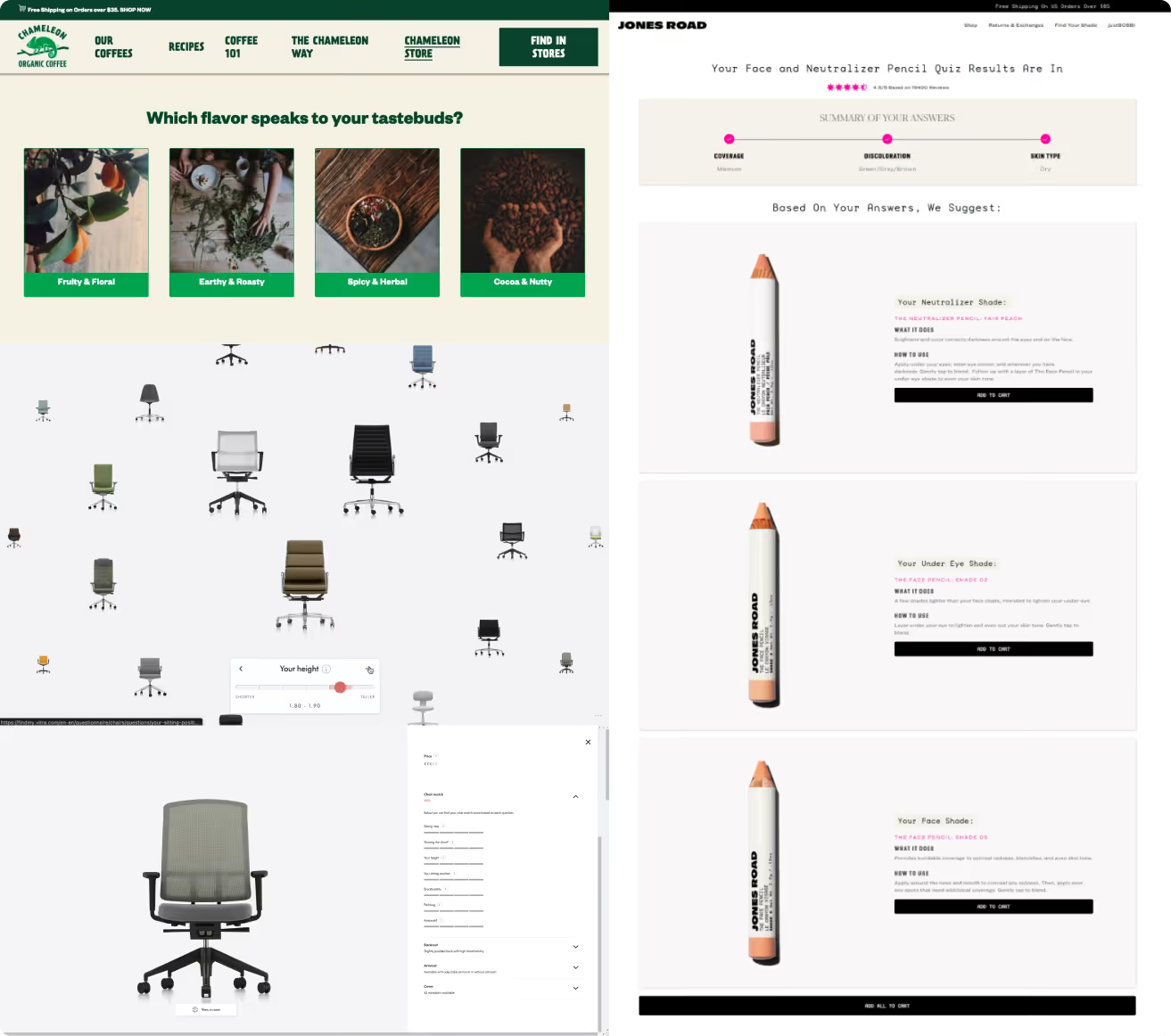
Looking at quizzes from other industries made it clear that they operate like product search filters.
Designing and validating the quiz logic
To align the team on what we were building, I designed a quiz logic diagram in Figma — the left side showing how each question progressively narrows the wine pool, the right side mapping edge cases and how result copy is generated.
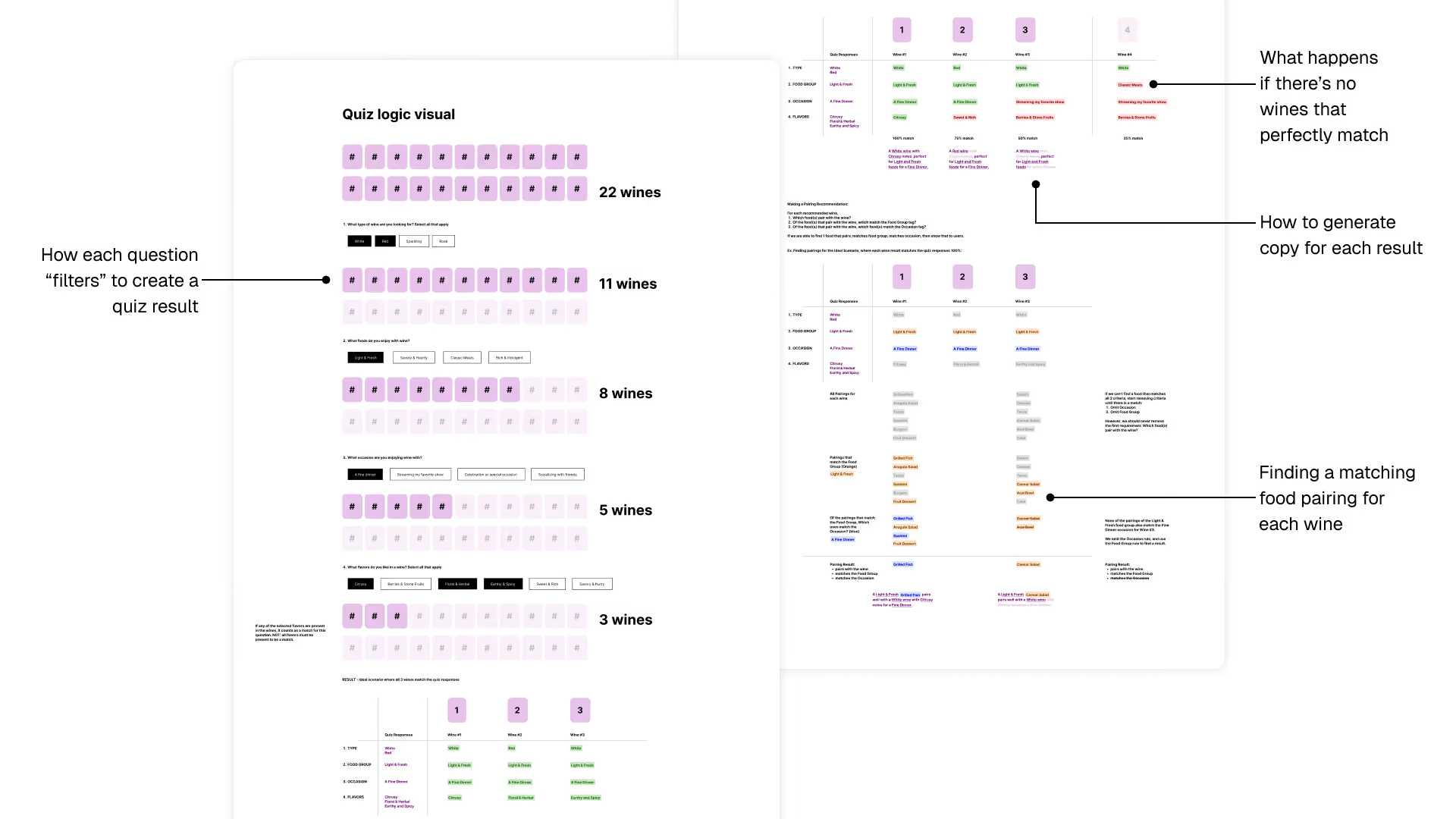
Left: how each quiz question narrows the pool of wines to match the user's criteria.
Right: edge cases — no perfect match handling, food pairing generation, and result copy generation.
I then used ChatGPT to categorize all wine and food data and built a tagging system in Google Sheets, so filtering by column replicated how the quiz would actually work. Running a live demo with the Sheet gave the CEO, Engineer, and PM confidence to move forward — and when I demoed the prototype to the customer, they renewed their contract and started adding wine data to the Sheet themselves.

Using ChatGPT, I built a tagging system in Google Sheets and simulated how the quiz works using column filters to get alignment from the team and customer.
Final design & results
Meet the PairAnything Wine Quiz
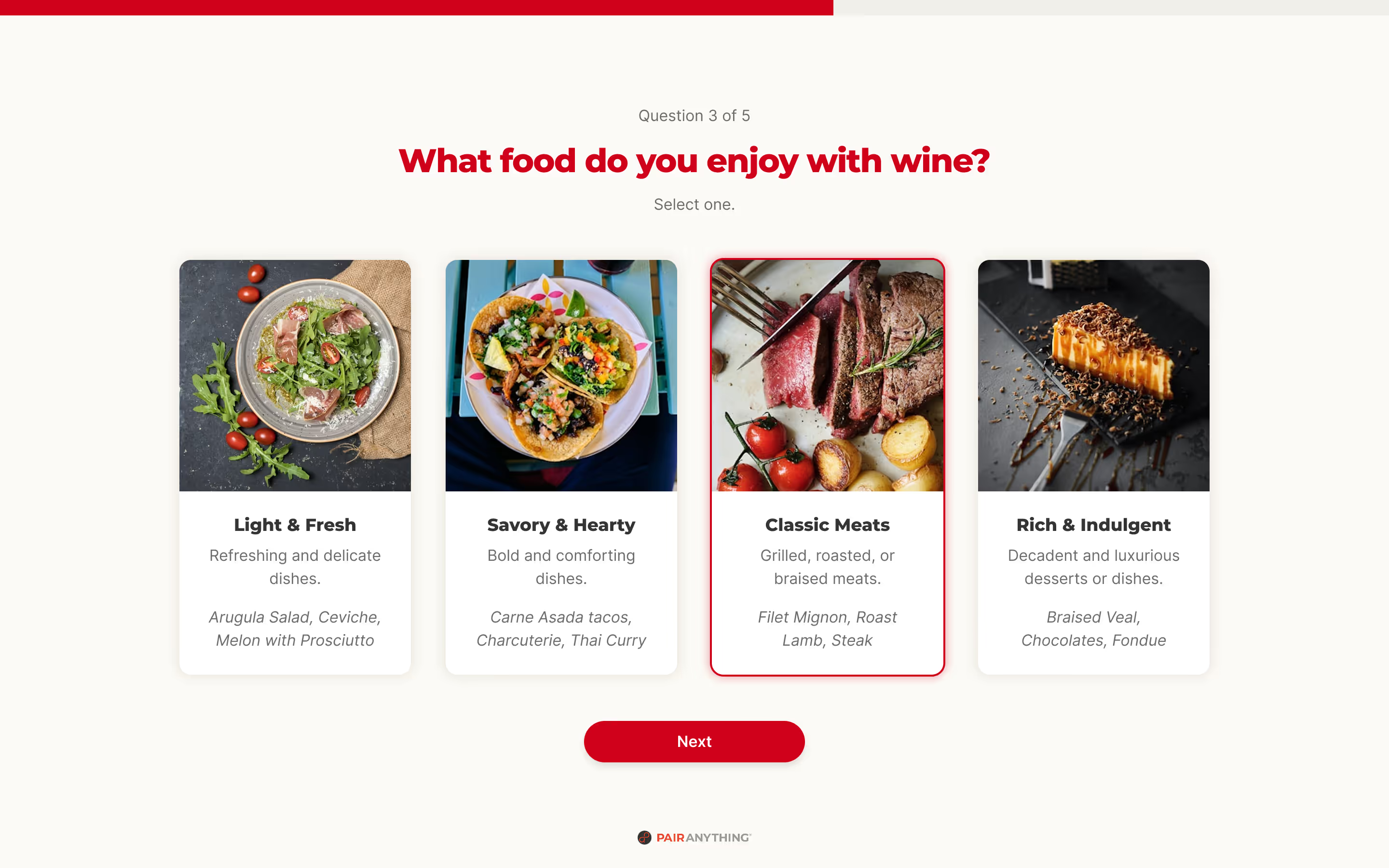
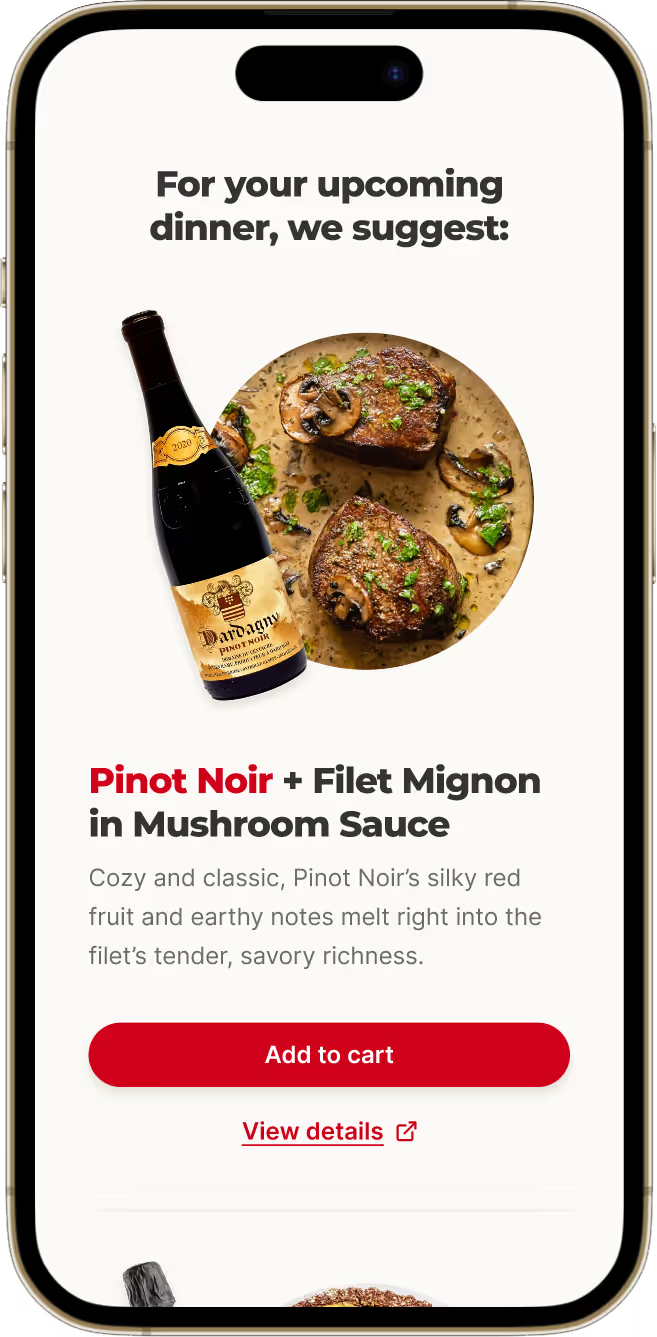
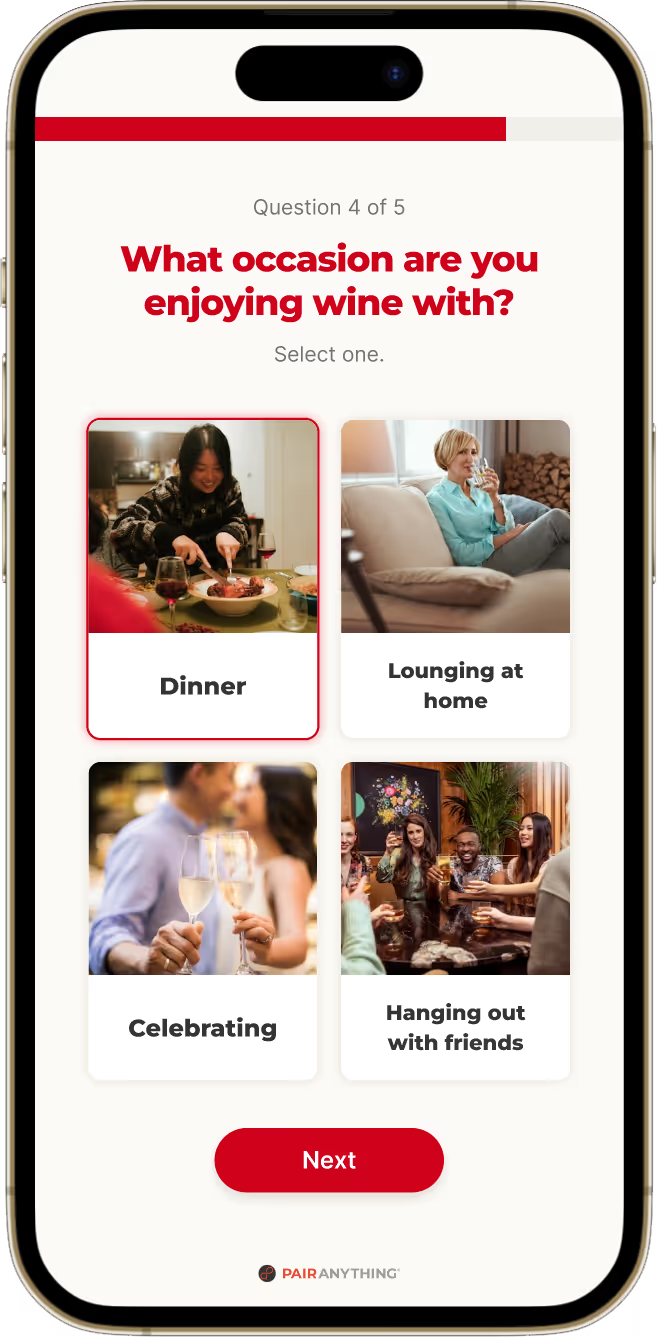
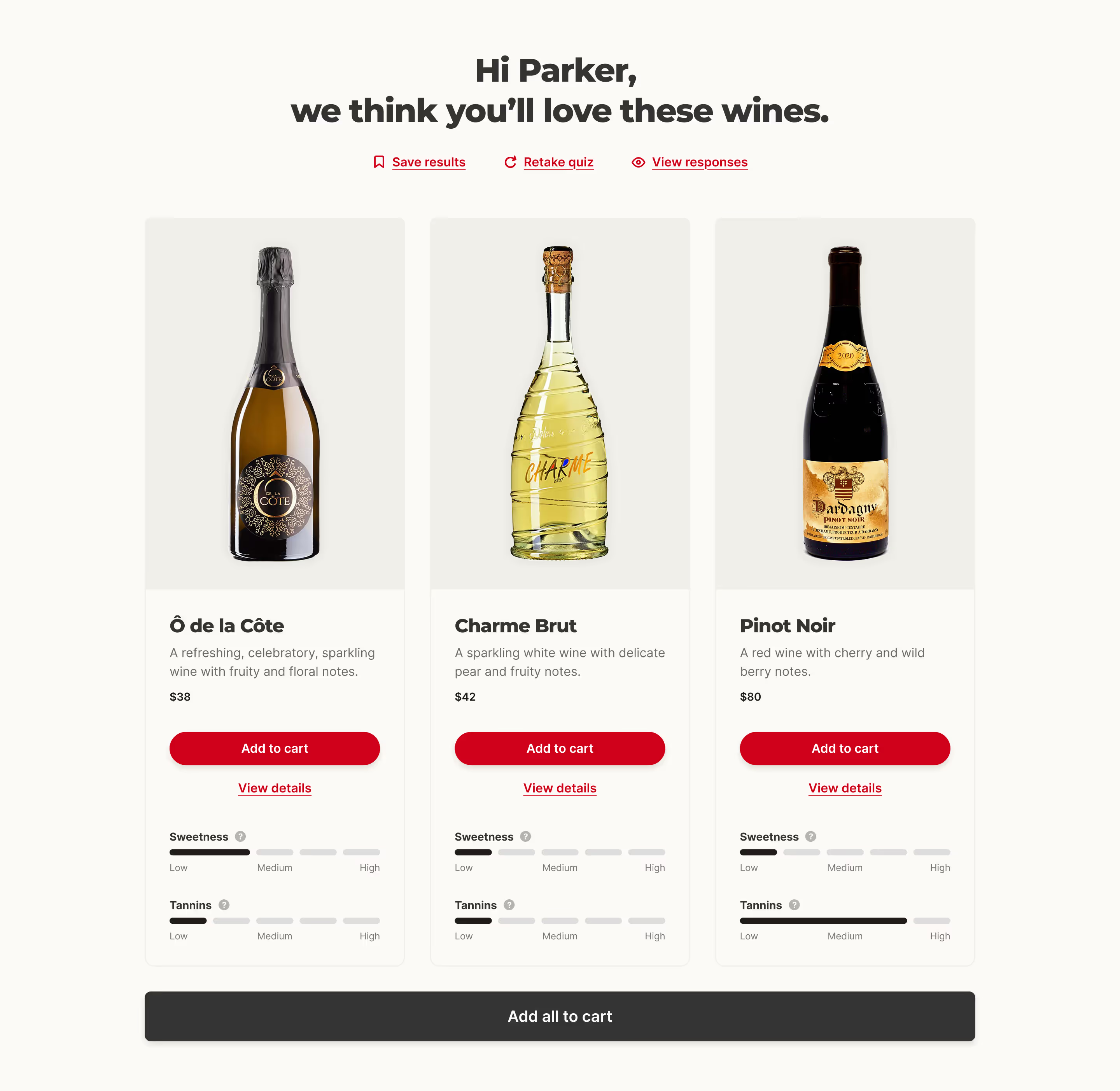
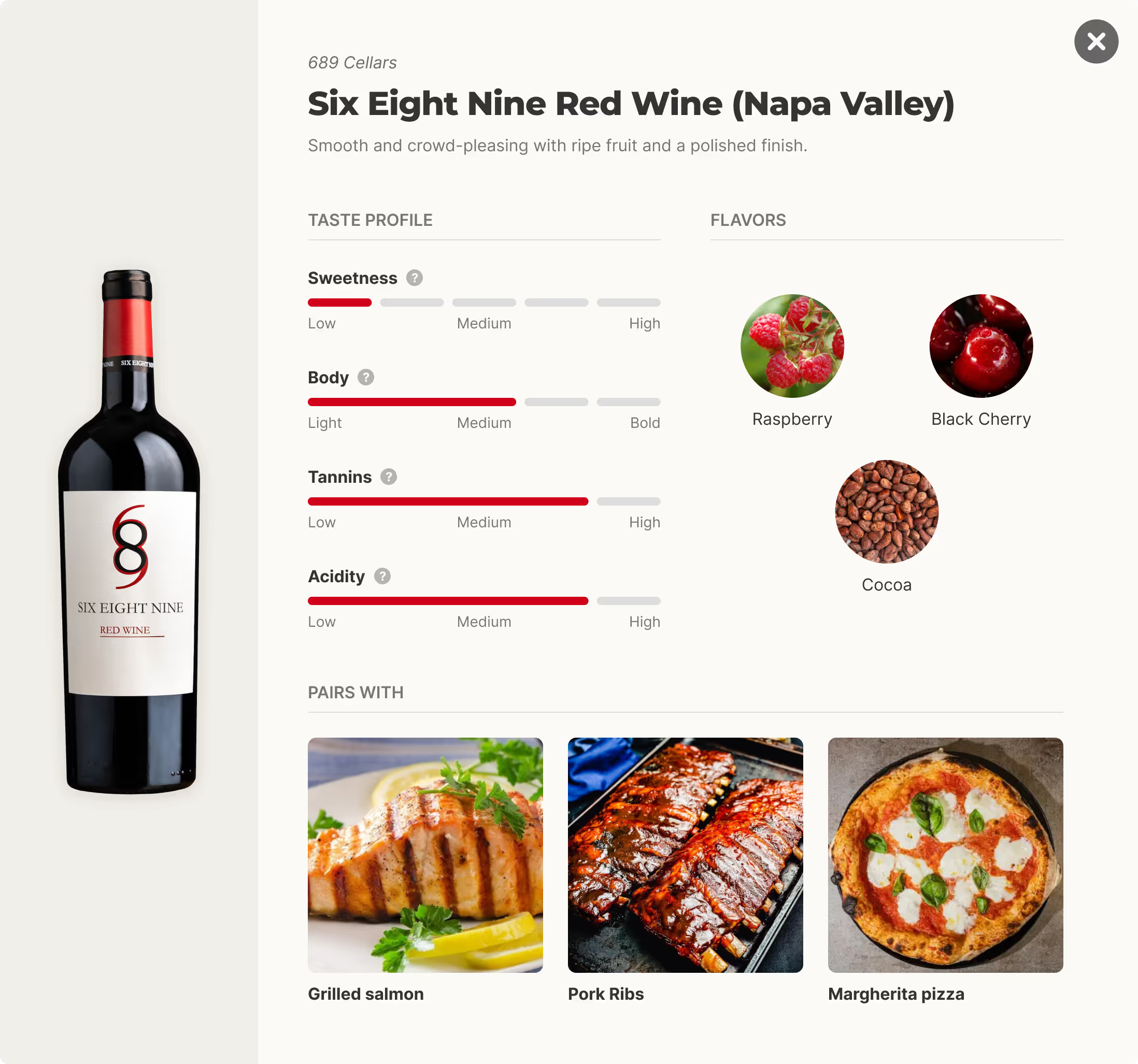
In late August 2025, we launched the PairAnything Wine Quiz as a Shopify app on a Swiss winery's online store. Shoppers answer a few quick questions about how they plan to enjoy the wine, and the quiz matches them with three wines and pairings to fit the vibe. They can add all the wines to their cart in one click, save their results via email, and check out directly on the winery's site. Since launch, we've seen strong signs of success:
The Wine Quiz had 7x more engagement compared to the old product.
PairAnything's customer base grew by 175%.
15% of quiz-takers saved their results via email.
The customer who was on the verge of cancelling renewed their contract.

Desktop design of the Wine Quiz.

Mobile design of the Wine Quiz.
Scaling with AI
The Google Sheet we built to validate the quiz also became an unexpected sales tool — the CEO would duplicate it with a prospective customer's wine catalog, I'd prototype a demo from it, and our Engineer would use it to launch. The workflow was consistent enough to automate: I built an AI-assisted onboarding tool using Lovable that web-scrapes a winery's site and fills in the wine data automatically, cutting a process that used to take weeks to minutes.
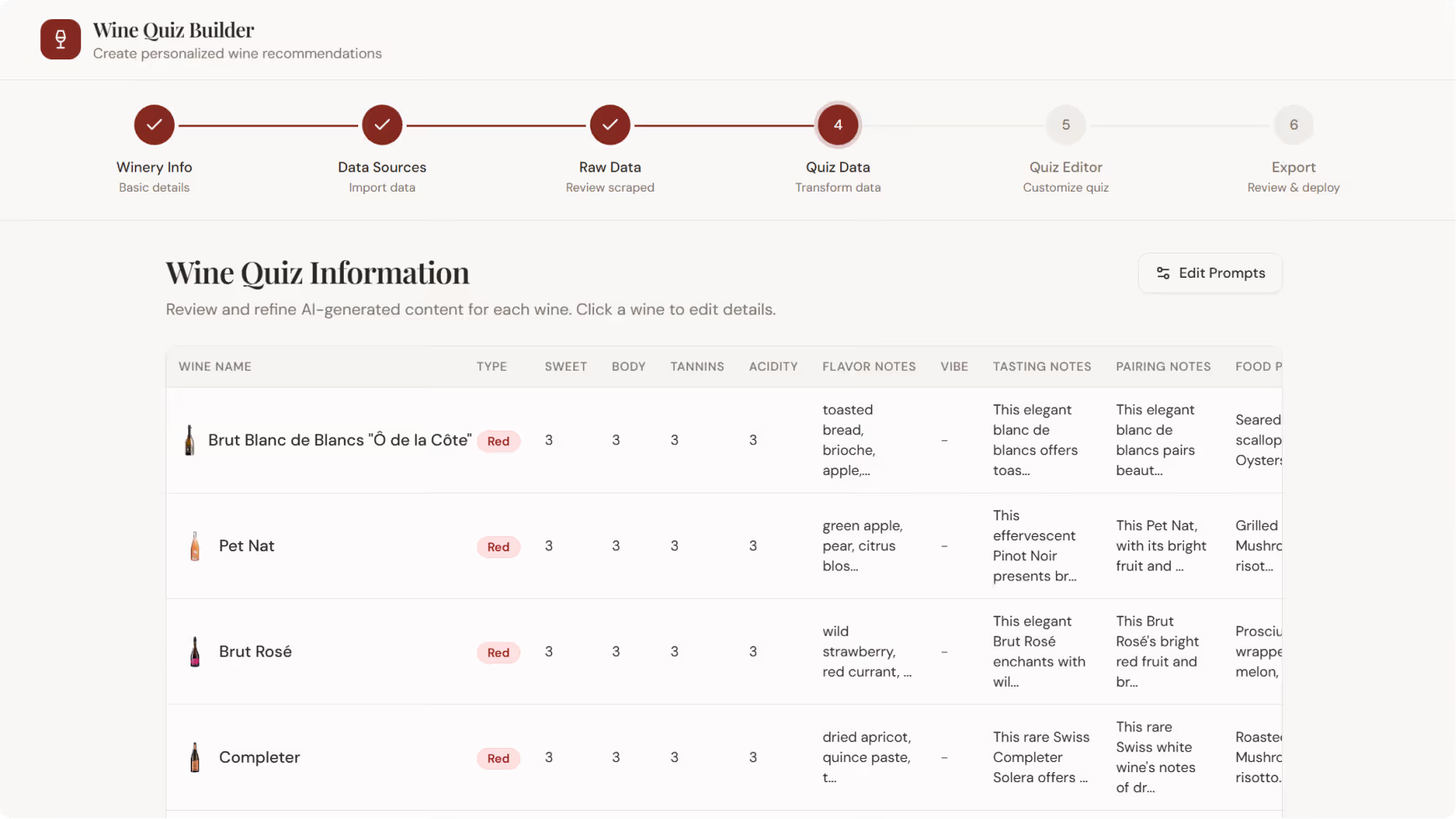
I built an AI-assisted tool using Lovable that reduced Wine Quiz customer onboarding from weeks to minutes.