Wine Kiosk
Designing a 0→1 in-store kiosk that opened retail as a new channel, driving 250% sales growth.
With thousands of wines in the grocery aisle, small wineries like Domaine Dardagny struggle to stand out. As Product Lead at PairAnything, I designed an in-store kiosk experience that helped shoppers discover Domaine Dardagny wines through relatable food pairings, boosting sales by 250% and validating retail as a viable market for PairAnything beyond e-commerce. Wines with pairings sold 3x more than wines without, and 15% of shoppers signed up for SMS marketing.
Designing a 0-to-1 product at the intersection of physical and digital applies anywhere: a tablet in a wine aisle has the same core challenges as one in a hospital, a bank, or a retail store.
Role
Product Lead & Designer
Duration
1 month
Team
CEO, Engineer, Researchers, Product Manager Mentor


Objective
Do we have a business in grocery retail, or do we need to pivot?
Transitioning from the e-commerce to grocery retail market was an uphill battle for PairAnything. We lacked solid proofpoints from past retail pilots, retailers ignored our outreach, investors doubted our business model, and even our own team questioned whether retail was the right move. Our future hinged on one critical question: Are we able to make a business out of wine pairing recommendations in grocery retail, or do we need to pivot?
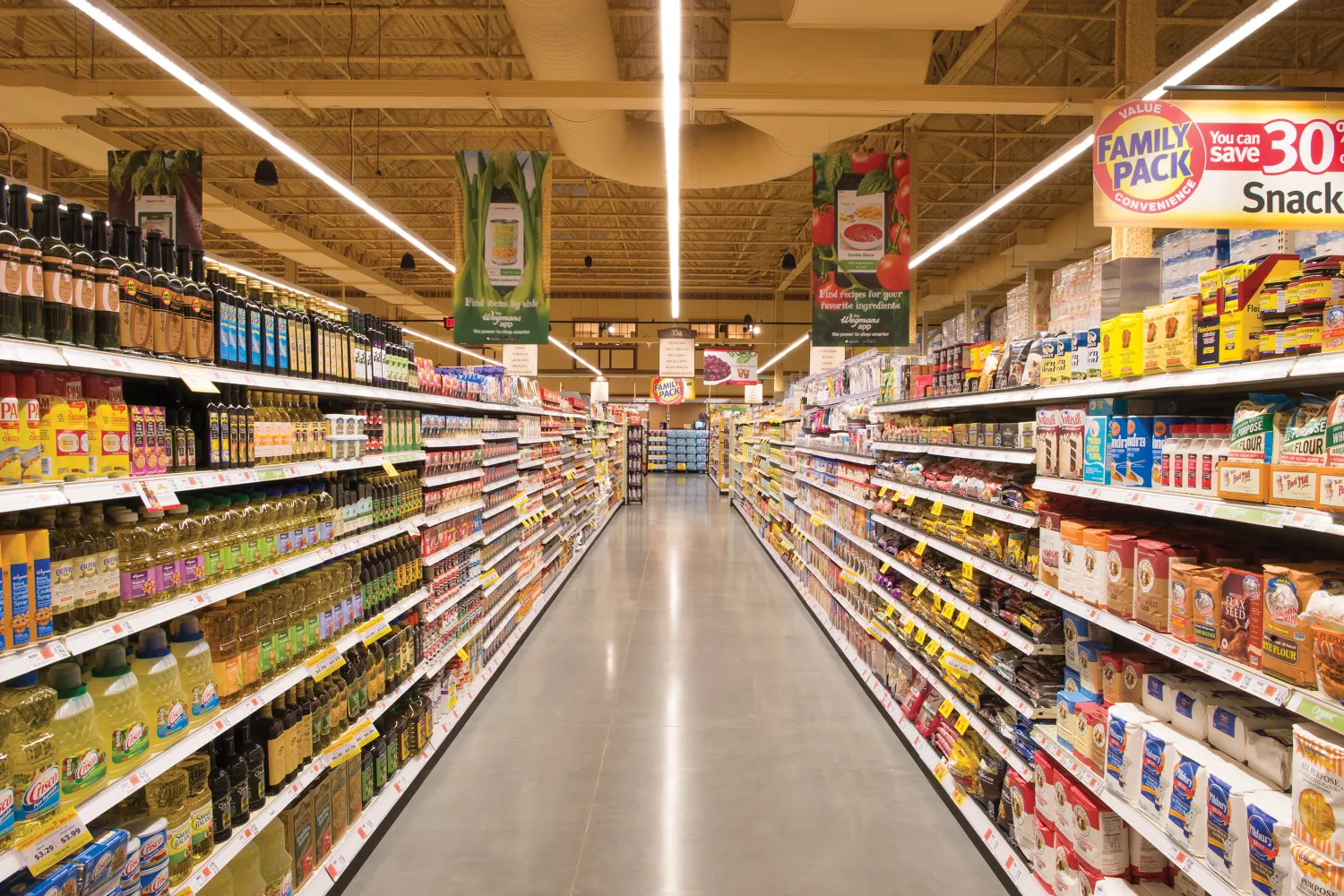
To test if grocery retail was the right market for PairAnything, I designed & led a two-week pilot at Corti Brothers, a local grocery store, to answer two key questions: Do shoppers want wine pairings, and do they drive sales?
Results
Pairings tripled wine sales, and shoppers wanted even more.
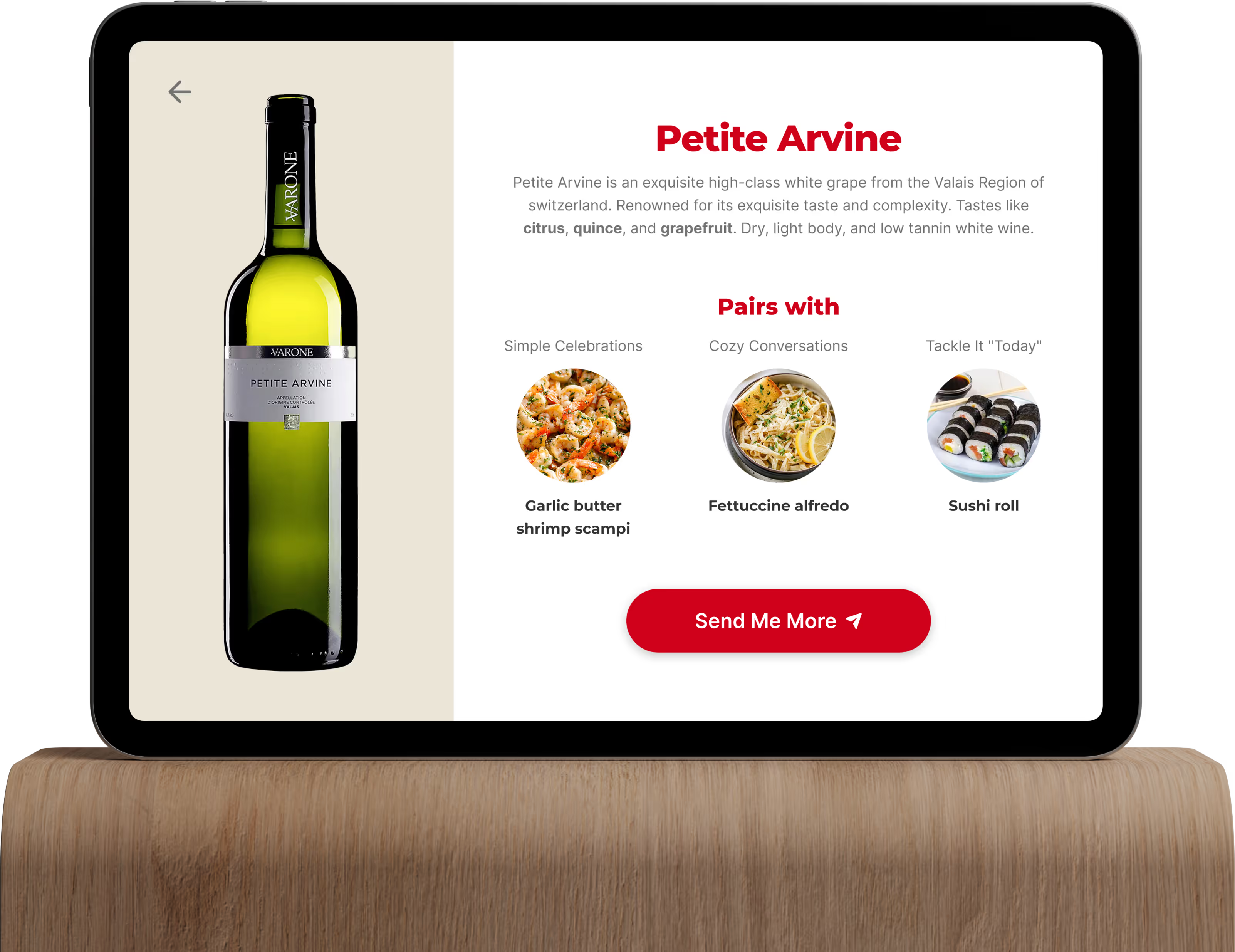
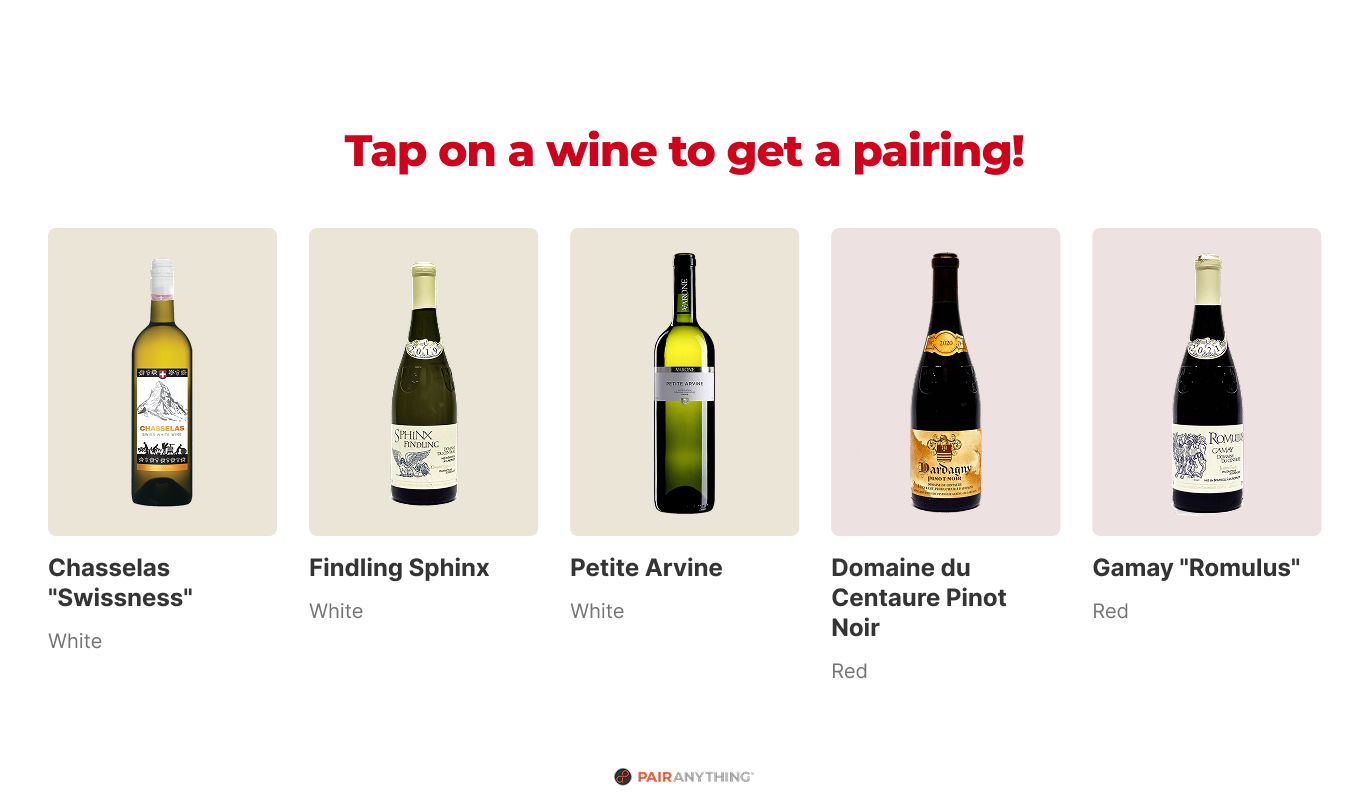
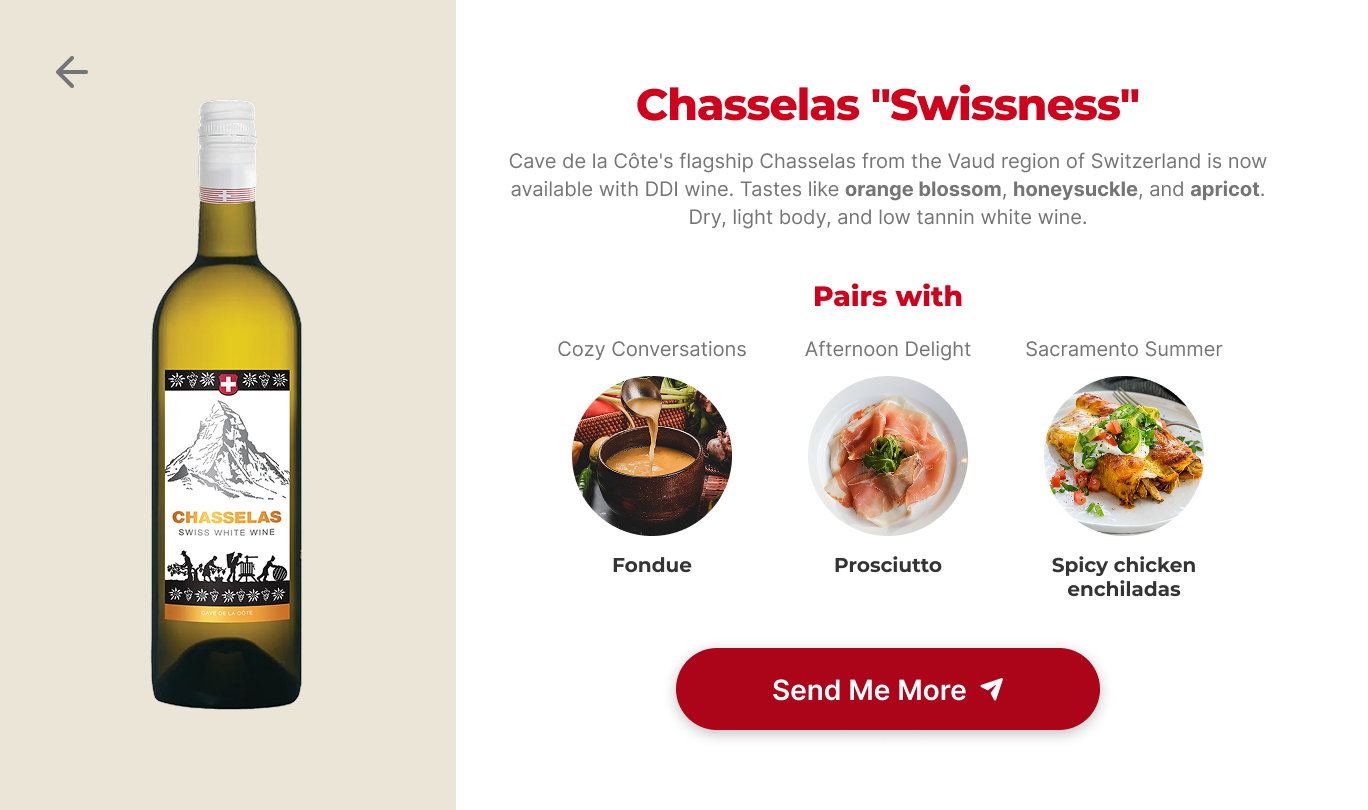
We put a kiosk loaded with Domaine Dardagny’s wines and food pairings inside Corti Brothers for two weeks. Shoppers could tap on a wine to view food pairings and enter their phone number to receive even more pairing recommendations.
Domaine Dardagny’s wine sales increased by 250%.
Wines with pairings sold 3x more than wines without.
15% of shoppers requested additional pairings via SMS.
Problem
Wineries operate in the dark at retail
We spoke with Domaine Dardagny, a small Swiss winery at Corti Brothers, to understand the challenges of retail firsthand. Their experience revealed two major pain points:
No sales data
Wineries receive zero sales data from retailers, so they don't know how their wines are performing in-store or whether they will secure their next monthly reorder. They resort to visiting stores in person to count inventory themselves, costing $2,000 per month per retail account.
Wineries are responsible for marketing
Retailers expect wineries to create and set up their own in-store marketing to engage shoppers. Traditional marketing strategies like live tastings are effective but too expensive for small wineries to run.
Rationale
A data product for wineries
I hypothesized that by learning what shoppers like, we could help them find wines they'll love, while giving wineries data on shopper preferences and sales patterns. Over time, our data can help them forecast which wines will succeed at which retail stores. To test this, I designed a two-week pilot to answer two key questions:
1
Do shoppers want our wine pairing recommendations?
Do end-users find value in our product?
2
Do wine pairings increase retail wine sales?
Do we have a viable business in the retail market?
Designing the kiosk experience
Getting shoppers to the ‘aha’ moment fast
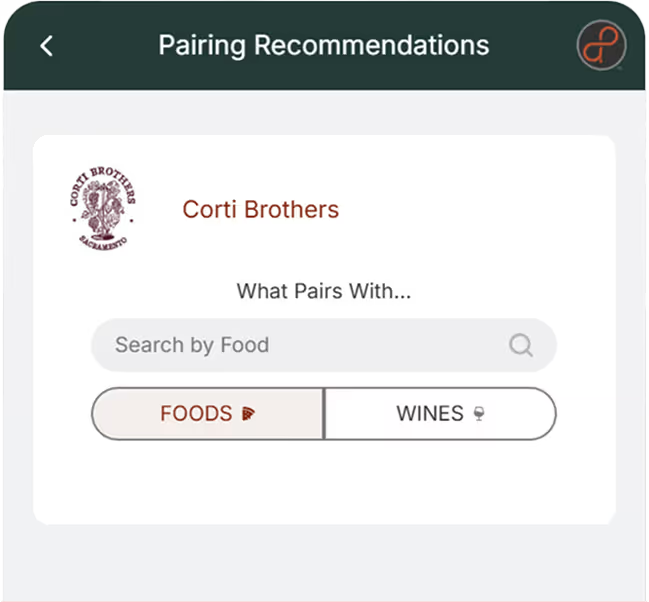
In previous PairAnything products, shoppers had to search for pairings. However, interviews with both shoppers and retailers revealed that a blank search bar created too much friction in a grocery retail environment, where shoppers want to get in and out quickly.
“
I want to be in and out of the store... Seeing a blank search bar doesn’t motivate me to use the kiosk. I’d probably walk right past it.
- Shopper testing the old PairAnything app
Based on these insights, I replaced the search bar with tappable cards featuring images of Domaine Dardagny's wines. Instead of thinking of a query and typing, shoppers could simply tap a card to see a pairing. This reduced cognitive load and got users to the 'aha' moment faster.

The card clicks revealed behavioral data about what actually caught shoppers' attention, allowing us to report insights back to Domaine Dardagny that they wouldn't have otherwise had. We learned that shoppers preferred white wines over reds and were drawn to tall, narrow bottles. In contrast, wines with softer curves and off-white labels received the fewest clicks, suggesting they were less visually appealing to shoppers.
Question 1
Do shoppers want our pairings?
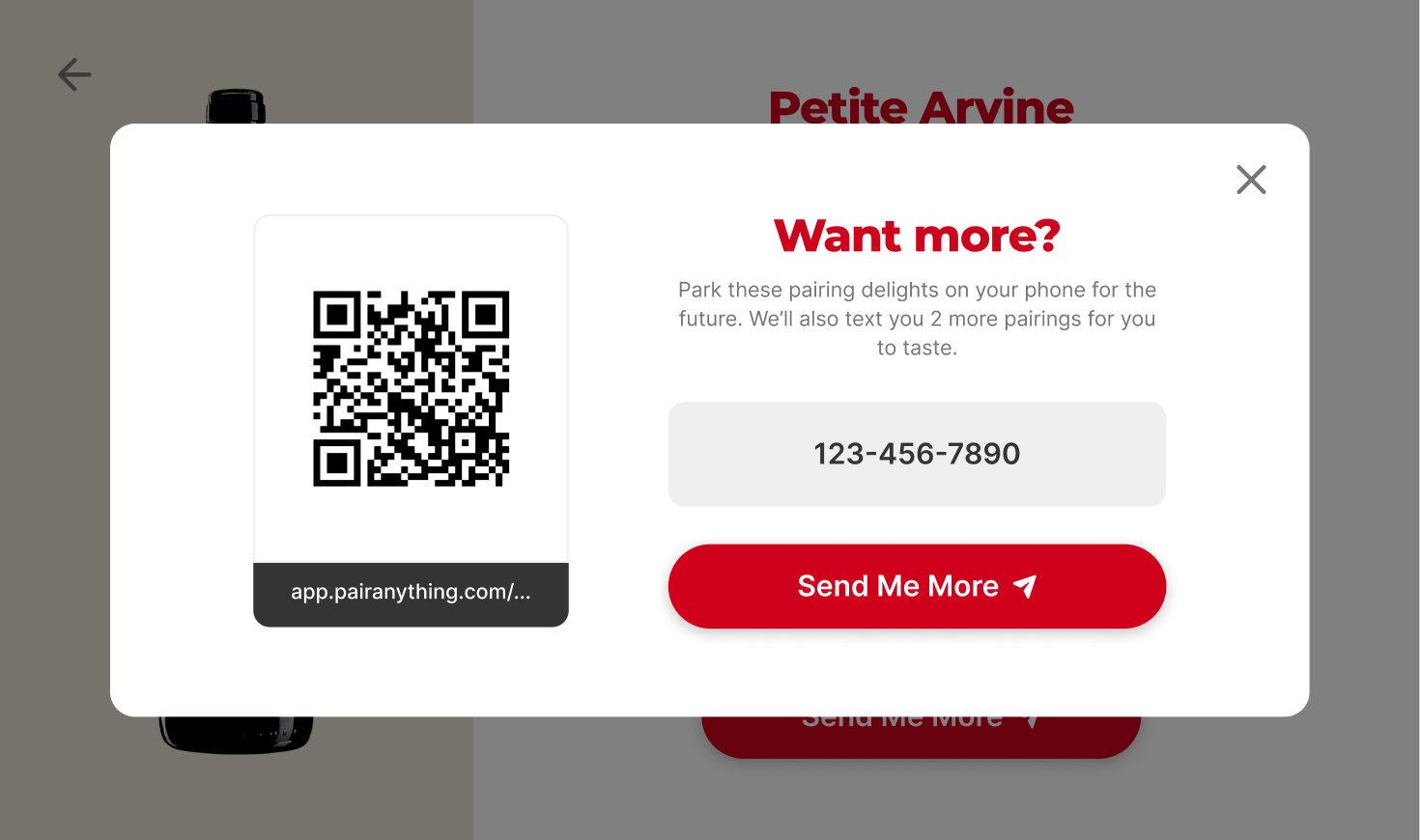
I needed a way to measure if shoppers actually found value from using our kiosk. Initially, shoppers could save pairings by creating a PairAnything account. However, through user research, we learned that no one wanted to make a new account on a public kiosk. So I changed the "Save Pairing" function into a "Send me more" button, where shoppers enter their phone number to receive more pairings via text. I wanted to test: Did shoppers want our pairing recommendations so much that they wanted even more?
15% of shoppers entered their phone number to receive pairings, confirming they valued our recommendations. This design choice let us measure product value with shoppers while also giving our winery customer what they needed: data on which wines generated the most interest, plus phone numbers for SMS marketing.
“
I try not to put my personal information on kiosks as much as possible. I would rather leave my phone number instead of my email... If I wanted to save the pairing for later, I would just use my phone and take a photo of the kiosk.”
- User, after testing the wireframes

Question 2
Do wine pairings drive wine sales?
To test if we had a business in retail, we needed to answer a fundamental question: Do our pairing recommendations motivate shoppers to buy wine?
Our CEO wanted to include all possible features in our 2-week pilot to maximize impact, while our advisor warned that testing too many variables would muddy the results. I aligned the team around a focused, testable hypothesis and designed a simple A/B test to isolate the effect of pairings:
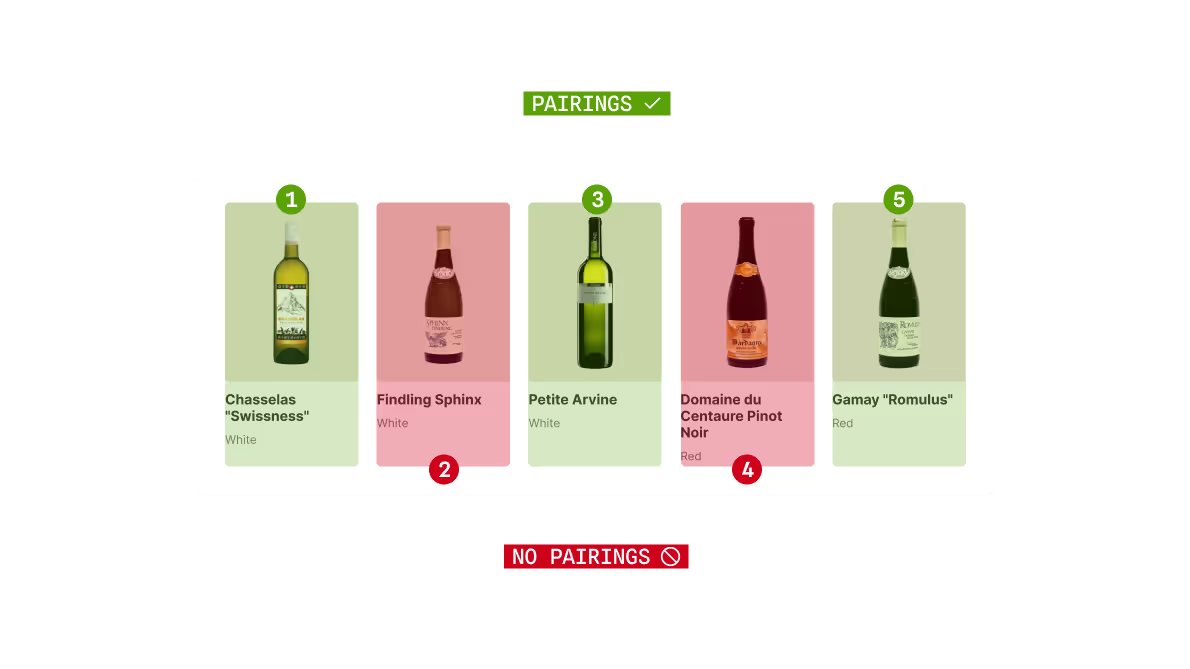
- 3 wines included pairing recommendations
- 2 wines had no pairings, but prompted shoppers to enter their phone number to receive them by text
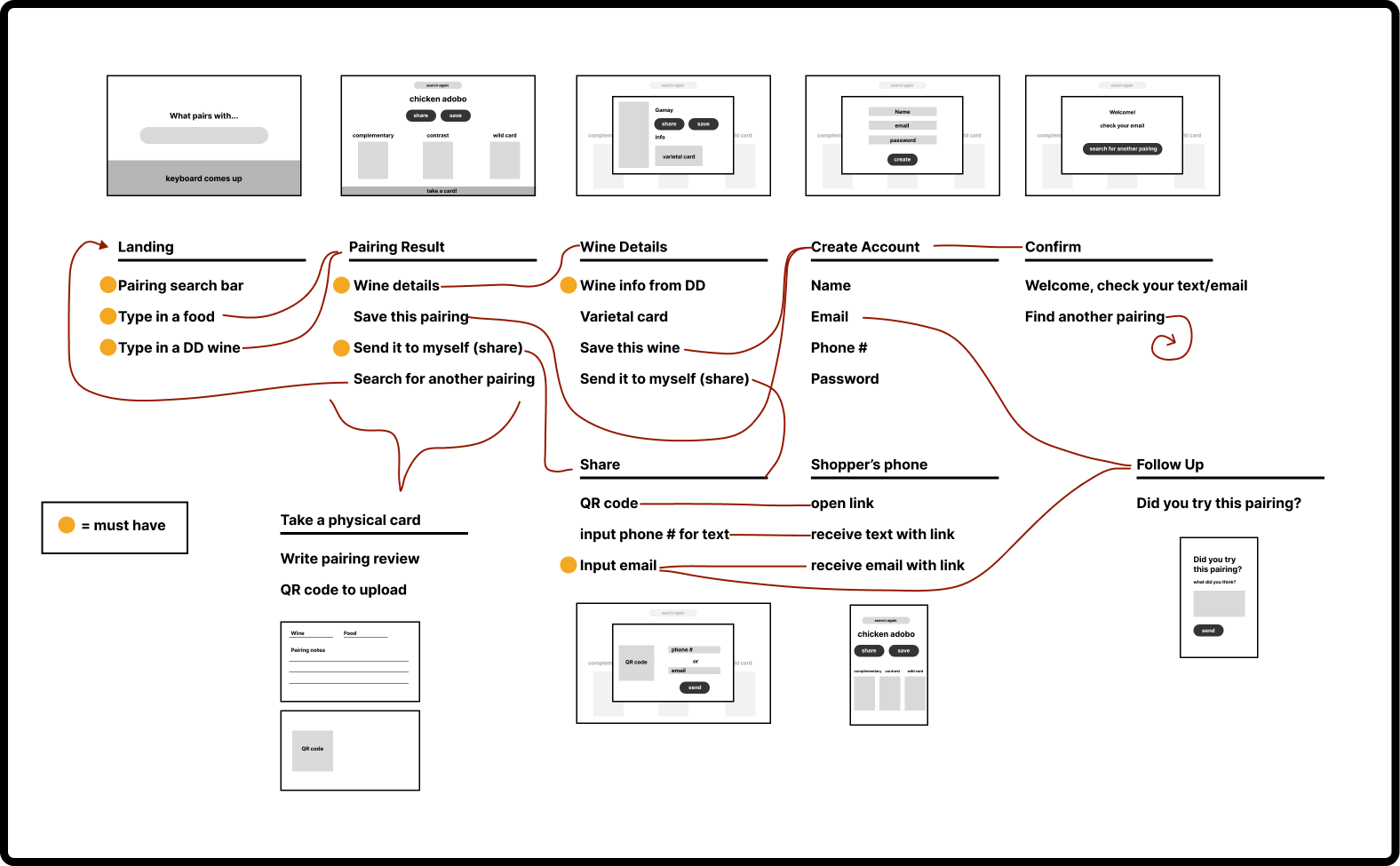
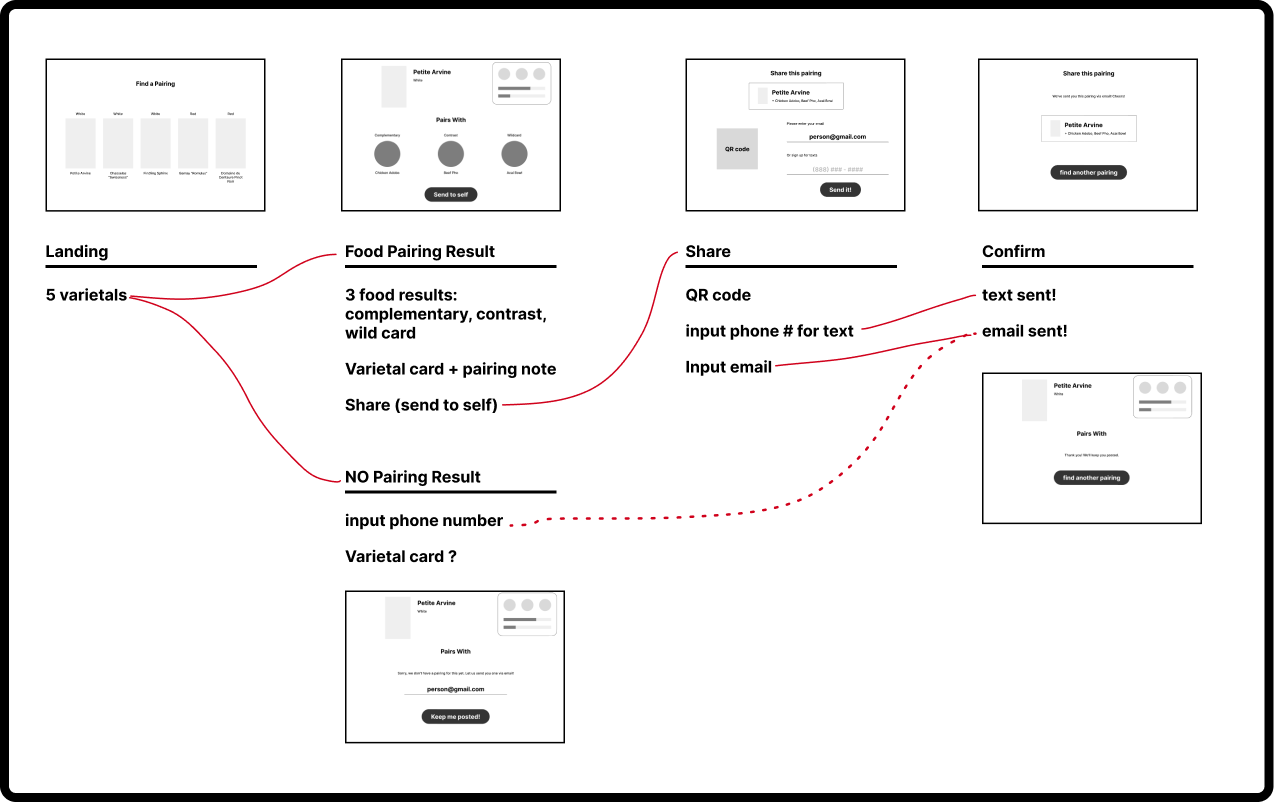
Breadboarding helped me align the CEO and advisor on a testable approach.
“
What if the first wine they tap on doesn’t have pairings?
- PairAnything CEO
Optimizing for first impressions
One concern from the CEO was that if a shopper's first tap landed on a wine without pairings, they might immediately walk away. To address this, I ran an in-person user test by presenting the prototype on an iPad and tracking which wines users tapped first. The results showed that people naturally clicked on wines in the middle and along the edges.
I adjusted the card layout to make shoppers more likely to encounter a wine with pairings on their first tap, placing wines with pairings in positions #1, #3, and #5, and wines without pairings in #2 and #4.

When shoppers click on a wine without pairings, they can read a tasting description and enter their phone number to receive the pairing later via text.
I also designed each wine page to include a brief tasting description, so that every interaction provided value to shoppers, even if they landed on a wine without pairings. Shoppers could then enter their phone number to "unlock" pairings and receive them via text.
The test worked. Wines with pairings sold 3× more than those without, confirming that our pairing recommendations drove purchases in a grocery retail setting.
Final design & results
Lauching the kiosk in-store drove wine sales by 250%.
Working closely with our engineer, we launched the PairAnything kiosk at Corti Brothers and remotely coordinated QA with onsite teammates. Since we couldn't access sales data from the retailer, we manually tracked wine sales by counting the number of Domaine Dardagny wines on the shelf every day. Our scrappy counting method showed clear results:
Wines with pairings sold 3x more than wines without.
Wine sales increased by 250%, confirming that our pairings drive sales.
We converted 15% of shoppers to SMS marketing
Confirming that shoppers value our pairings.
What this meant for the business
This two-week pilot proved that retail is a viable vertical for PairAnything. The results — 250% sales growth, 3x lift on paired wines, and 15% SMS conversion — gave us the proof points we needed to pitch investors, wineries, and new retail customers. It worked: we landed a partnership with a grocery store in Puerto Rico. This time, we loaded the Wine Quiz onto the kiosk — letting us test a personalized discovery model in a new market and measure whether a different interaction could drive the same results.

Iterating for the second launch
Before deploying to Puerto Rico, I revised the kiosk experience based on what we learned from Corti Brothers. One clear issue: triggering the tablet's native keyboard filled most of the screen, making it hard to navigate. I removed all text-input questions — including the "What's your name?" prompt — and replaced the email sign-up field with an SMS prompt using a large on-screen numpad. The fix made the experience faster and more accessible for in-store shoppers without sacrificing the conversion flow.